Claude Design Grows Up: From Pretty Mockups to Build-Ready Output
Claude Design Grows Up: From Pretty Mockups to Build-Ready Output
Anthropic's Claude Design just got a major update—design system imports, two-way Claude Code integration, and exports to major tools. Here is how it shifts from a blank-canvas generator into a brand-compliant production platform.
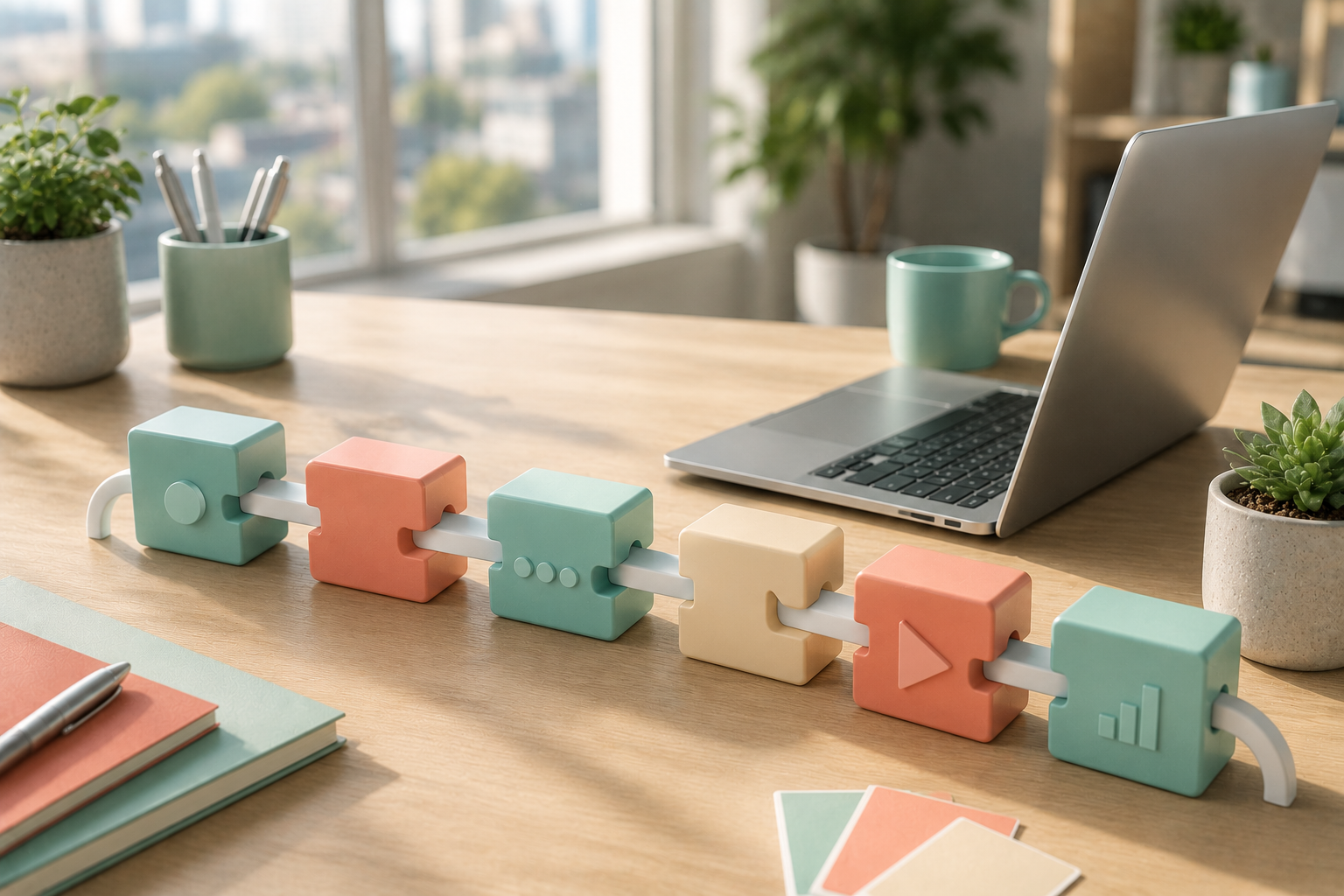
Anthropic's Claude Design has moved beyond being an AI that just makes attractive mockups. With this update it can ingest an existing design system and produce work that conforms to it, then sync two ways with Claude Code. The biggest shift: a project that starts from a prompt now runs continuously through to a build-ready state.
A Workflow That Lives in Canvas and Chat
Claude Design runs as a split screen—chat on the left, a live canvas on the right. You describe what you want, Claude generates a working design on the canvas, and you adjust it directly by dragging, resizing, and aligning elements. Generation and hands-on editing blend in the same view, which sets it apart from earlier "generate and done" tools. It is powered by Claude Opus 4.7 and offered as a research preview to Pro, Max, Team, and Enterprise subscribers.
This "generate by conversation, refine by hand" loop is the same territory Figma's AI features, Galileo, and Vercel's v0 have been chasing. The difference is that Anthropic anchors its output in structure you can hand to implementation rather than in a flat image. Because the result comes up as a set of editable components rather than a single polished picture, downstream rework tends to shrink.
Importing—and Enforcing—Your Design System
The headline feature is the ability to bring in one or more of your own design systems from a GitHub repository, design files, or raw uploads. Once imported, Claude builds with those components, checks its output against the system, and auto-corrects before you ever see the result. Its role has changed from generating something plausible on a blank canvas to guaranteeing brand consistency.
"real designers of real companies want that stuff to happen"
Anthropic frames the goal not as producing something that merely looks plausible, but as making Claude adhere to the qualitative judgment professional designers actually expect.
This is where the real-world impact lands. The perennial pain of a design system is that it gets built but not followed. Industry surveys on design systems have repeatedly flagged adoption and enforcement—not creation—as the hard part. Auto-checking generated output against the system is an attempt to close that governance gap from the tooling side. The counterpoint: aggressive auto-correction risks homogenizing work in ways designers did not intend, so keeping a human in the loop for final calls still matters.
Why Two-Way Claude Code Integration Matters
Claude Design and Claude Code now work in both directions. You can hand a design off to be built, or start in the terminal and sync your design projects back. When a design is ready, Claude packages everything into a handoff bundle you can pass to Claude Code with a single instruction. The design philosophy is clear: shrink the translation cost that sits between design and implementation.
Design-to-engineering handoff has long been the highest-friction step in front-end work. Translating a static design into code by hand breeds interpretation gaps and rework. If two-way sync holds up, that back-and-forth collapses into one flow. Still, the "last 10 percent"—edge cases and final polish—remains engineering's job, so the integration realistically speeds the path to a first draft rather than replacing the build.
Exports to Existing Tools, and What Teams Should Do
Output can go to PDF and PowerPoint plus Adobe, Canva, Vercel, Replit, Lovable, Gamma, Miro, Wix, and Base44. Rather than locking users into Claude, Anthropic has chosen to sit upstream of existing workflows. As more tools can carry a project from design through implementation, small teams and individuals can launch products faster.
Strategically, opening exports to rival tools is a confident bet. Instead of trapping users, Anthropic lowers switching costs and prioritizes getting the work started inside Claude. The move to make now: import your design system early and measure the design-to-build lead time through the Claude Code integration. Once you can see the reduction in your own numbers, you have a concrete basis for the adopt-or-not decision.
Key takeaways
This update pushes Claude Design's value from "generating attractive mockups" to "supplying build-ready work." Powered by Claude Opus 4.7, it combines a generate-by-conversation, refine-by-hand canvas, design-system import with automatic conformance, and two-way Claude Code integration — together turning the path from prompt to implementation into a single flow.
The real-world payoff is enforcing the design system that so often gets built but not followed, and shrinking the high-friction translation cost between design and engineering. Yet homogenization from aggressive auto-correction and the "last 10 percent" of polish still belong to humans and engineers. Given the confident strategy of opening exports even to rival tools, the move to make now is to import your design system early and measure the reduction in design-to-build lead time in your own numbers.
PR

Sources
This article was independently written and edited by the Business Age Editorial Team based on the multiple verified sources below. See each source for full details.
- GIGAZINERead the original →
- AnthropicRead the original →
- VentureBeatRead the original →
PR
Related
Related articles

SAP Bets on the "Autonomous Enterprise": When ERP Moves From Advice to Action

ServiceNow Brings Its Autonomous Workforce to Every Department — AI That Acts, Not Just Advises

AI Agents Hit 72% Production — Yet Most Firms Still Can't Show the Value

Microsoft's Seven In-House MAI Models: A Lower-Cost Bid to Cut Its OpenAI Dependence

How "Delegating" Software Development Changed: Inside the Claude Code × Cursor Stack

The Day MCP Became AI's Universal Standard: What 10,000 Servers Mean for the Enterprise
Categories
Browse other categories





Get the latest business methods, first.
We share new articles and notable tools and trends on social.