
How AI Minted the World's Youngest Self-Made Billionaires: Forbes' Under-30 List 2026
How AI Minted the World's Youngest Self-Made Billionaires: Forbes' Under-30 List 2026
Forbes' 2026 under-30 billionaires list hit a record 35, with a record 12 self-made — most from AI startups like Mercor and Cursor. We unpack how three 22-year-olds became the world's youngest self-made billionaires, how to read sky-high valuations, and what it means for you.
In 2026, a record 35 people made Forbes' list of billionaires under the age of 30. Their combined net worth reached $92.4 billion (as of March 1, 2026), down from $152.3 billion a year earlier. But the real story isn't the headcount — it's the composition. A record 12 are self-made, and most of them built their fortunes in AI. Where inherited wealth once dominated the roster, founders in their early twenties are now rewriting it. This is more than a rich list. It is a mirror showing where, and how fast, value is being created in the world today.
Billionaires at 22: The Startup Teaching AI "What Only Humans Know"
The world's youngest self-made billionaires are the three co-founders of Mercor, a company that organizes training data and expert networks for AI labs. Surya Midha, Brendan Foody, and Adarsh Hiremath are all 22. High-school debate teammates from the San Francisco Bay Area, they launched the company in 2023 and reached the summit in barely two years.
In October 2025, Mercor hit a $10 billion valuation in a $350 million Series C led by Felicis — five times its Series B. Revenue had crossed a $500 million annualized run rate by September 2025, and the company is already profitable. Each founder is estimated to hold about 22% of the company, putting each individual net worth at roughly $2.2 billion.
What they actually do is connect domain experts — doctors, lawyers, physicists — to AI developers, defining evaluation rubrics and "correct answers" through human judgment. Foody summed up the momentum bluntly.
「We have one of the fastest revenue ramps of any company in history.」
A company that began as a résumé-screening service pivoted into teaching AI "what only humans know." Once the race over raw model capability had largely played out, the opening lay in how to inject human-specific knowledge — judgment, nuance, taste. That pivot is the engine behind this unusual growth.
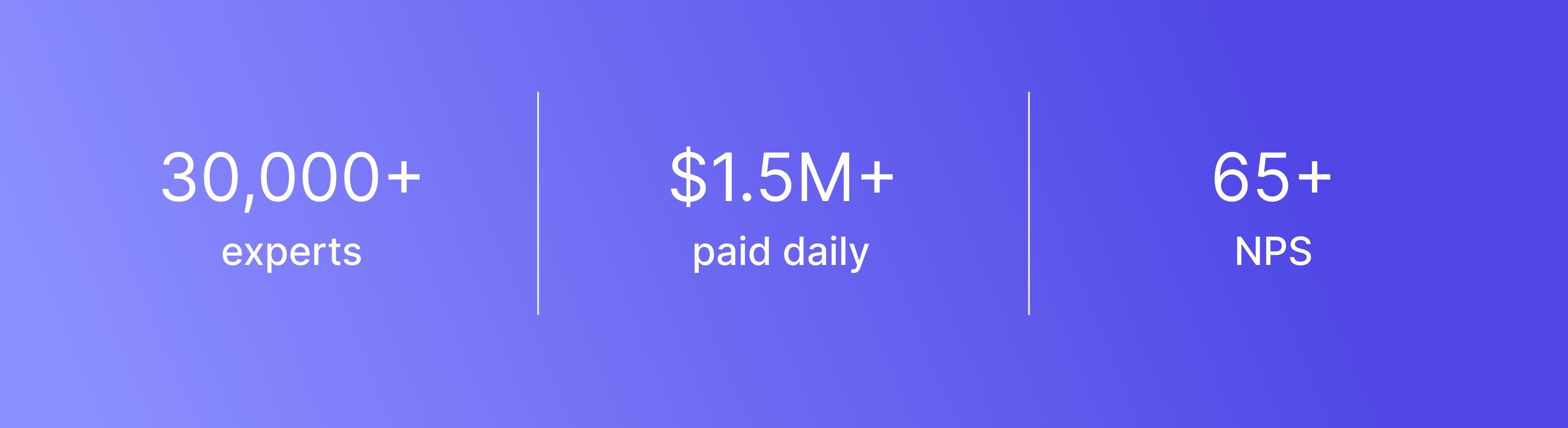
The scale of that bet shows up clearly in the metrics Mercor published itself. At the time of its Series C (October 2025), more than 30,000 experts were on its network, over $1.5 million was paid out to them daily, and its NPS exceeded 65. Operating a talent pool of that size — people who teach AI what humans know — is what underpins the $10 billion valuation.
A Map of the 12 Self-Made: AI Rewrote the Roster
It isn't just the Mercor trio. This year's roster is dotted with AI startup founders. The four co-founders of Cursor, the AI code editor — Michael Truell (25), Aman Sanger (25), Arvid Lunnemark (26), and Sualeh Asif (26) — all met at MIT, and all became billionaires in their twenties. Their company, Anysphere, raised $2.3 billion in November 2025 at a $29.3 billion valuation. Annualized revenue climbed from $100 million in January 2025 to $1 billion that November, and $2 billion by February 2026.
Sweden's Lovable, which champions "vibe coding" — building apps from natural language — reached a $6.6 billion valuation (December 2025) roughly a year after its late-2024 founding. Co-founder Fabian Hedin joined the self-made billionaires too. Alexandr Wang (29), who founded the data-labeling firm Scale AI at 19, saw Meta take a 49% stake via a roughly $14.3 billion investment in June 2025 (valuing Scale at about $29 billion); Wang himself became Meta's chief AI officer.
A newer arena — prediction markets — minted young wealth as well. Luana Lopes Lara (29), co-founder of Kalshi, became the world's youngest self-made woman billionaire. A former ballerina and MIT graduate with an unusual résumé, she holds an estimated 12% stake alongside co-founder Tarek Mansour. In December 2025 the company raised more than $1 billion at an $11 billion valuation.
Lining up the leading AI startups by valuation — alongside the founders themselves — shows just how quickly value has swelled.
| Company | Under-30 founder(s) | Business | Latest valuation (as of) |
|---|---|---|---|
| Mercor | Midha, Foody, Hiremath (22) | AI training data & expert marketplace | $10B (Oct 2025) |
| Cursor (Anysphere) | Truell (25) + 3 | AI code editor | $29.3B (Nov 2025) |
| Lovable | Hedin (26) + co-founders | Vibe coding | $6.6B (Dec 2025) |
| Scale AI | Wang (29) | Data labeling | ~$29B (Jun 2025) |
| Kalshi | Lopes Lara, Mansour (29) | Prediction markets | $11B (Dec 2025) |
For context, the youngest billionaire of all is Amelie Voigt Tregdes (20) of Brazil, who inherited a stake in the electric-motor giant WEG. Inherited wealth still forms the majority of the list — but the names grabbing the headlines are clearly the AI self-made.
Why Such Vast Wealth Now Arrives in One's Early Twenties
Twenty years ago, Mark Zuckerberg debuted on this ranking at 23. The Mercor trio broke that record at an even younger age. Why does the money arrive so early, and at such scale? The reasons sort into three.
First, AI works as an "amplifier of value." Even a small team can grow revenue exponentially by leveraging models and infrastructure. The pace at which Cursor reached $2 billion in annual revenue in three years defies the old logic of SaaS. Because the product spreads worldwide at once, across language barriers, the take-off angle is simply steeper.
Second, the concentration of capital. Leading VCs are pouring vast sums into AI, and valuations multiply in short order. Mercor's valuation grew fivefold in eight months. If founders retain a meaningful equity stake, those paper gains are counted directly as wealth. In other words, most of this fortune derives from the valuation of shares, not cash in hand.
Third, the flow of talent. The Mercor three and the Cursor four met through selective channels like the Thiel Fellowship and MIT, and committed to building early. Foody dropped out of college to bet on the company, recalling that schoolwork was something he had to discipline himself to do, while the startup became something he couldn't stop thinking about. Early focus, colliding with the timing of surging AI demand, is what reset the youngest-ever record.
How Founders and Investors Should Read the Valuations
The crucial distinction is that a "valuation" and "actual value" are not the same thing. A valuation simply stretches the price paid for a slice of shares in the latest funding round across the whole company; it is not the price set by daily market trading. Net worth, too, is an estimate that applies that valuation to a founder's holdings. That is precisely why Forbes labels net worth "as of March 1, 2026." When you read these numbers, build the habit of asking when, in which round, and on which shares the price was set.
For founders, the lesson lies less in scale than in whether you can build a structure of amplification. Mercor earned its valuation not for its original résumé-screening business but for pivoting quickly into supplying human expertise, demand for which is exploding in the AI era. Where in your business is the lever that technology can multiply many times over? Can you recast your expertise or customer base into a form that AI can amplify? That is the question worth asking.
For investors, the point is never to forget that such valuation surges are an advance on expectations. In every major technological revolution, early valuations have priced in large hopes, and a shakeout has followed. The discipline to separate the basis for a price tag from the actual capacity to generate cash — Mercor's profitability, Cursor's revenue growth — is worth all the more amid the euphoria.
The Questions Beyond the Hype — and What It Means for the Rest of Us
One thing not to miss on this year's list is the rise of prediction markets. Kalshi and Polymarket let users bet on the outcomes of elections, sports, and cultural events, and have grown fast as regulated services in the United States. In Japan, however, such online betting can constitute illegal gambling under criminal law. Even when a service is legally operated abroad, accessing and using it from within Japan may invite liability. The heat of a new market does not necessarily transfer to one's own country — a point worth keeping in mind.
The more fundamental question is where you choose to stand in an era when AI amplifies value. Foody foresees a substantial share of knowledge work eventually being automated. Whether you read that change as a threat that takes jobs or an opportunity to amplify your own expertise is the dividing line. What this year's 35 demonstrate is that those who bet on the latter were rewarded fastest.
For workers and founders in Japan, the lesson is plain. Even without large capital, combining the lever of AI with the first-hand expertise that only you possess can transform how fast value grows. The point is not to chase trendy tools, but to identify where you hold knowledge no one can replace, and to translate it into the shape of a business that AI can amplify. The 35 young billionaires are simply the people who succeeded at that translation first.
Key Takeaways
The 2026 Under-30 Billionaires list shows — beyond the record 35 names and record 12 self-made — that AI has changed how wealth is made. The Mercor trio became the world's youngest self-made billionaires at 22 (a $10 billion valuation, October 2025), Cursor reached $2 billion in annual revenue in three years (February 2026), and Kalshi's Lopes Lara became the youngest self-made woman. At the same time, valuations are only estimates from the latest round, and net worth is a calculation as of March 1, 2026. Read the dates and the basis of every figure — and ask whether you can be on the side that uses AI as an amplifier. That is the question this list puts to all of us.
PR

Sources
This article was independently written and edited by the Business Age Editorial Team based on the multiple verified sources below. See each source for full details.
- Forbes JAPAN: 35 under-30 billionaires, 2026 editionRead the original →
- Fortune: Mercor founder Brendan Foody interviewRead the original →
- Fortune: Luana Lopes Lara / KalshiRead the original →
- The Next Web: Cursor / Anysphere valuationRead the original →
- TechCrunch: Mercor quintuples valuation to 10B with 350M Series CRead the original →
PR
Related
Related articles

June 2026's AI Money Goes to "Applied AI": Reading the Investment Terrain Founders Should Watch

AI Funding Hits $300B in a Quarter — Reading the Terrain Beneath the Mega-Rounds

$2.59 Trillion in AI Spending: What Gartner's "Inflection Year" Really Means

Big Money Floods AI Customer Support — So Why Are Some Firms Rehiring Humans?

From Broad-and-Shallow to Narrow-and-Deep: Why Money Flows to Vertical AI Agents

$14.6B in Five Months: The VC Money Pouring Into Defense Tech in 2026
Categories
Browse other categories





Get the latest business methods, first.
We share new articles and notable tools and trends on social.