Microsoft's $10 Billion Bet on Japan as an AI Infrastructure Hub
Microsoft's $10 Billion Bet on Japan as an AI Infrastructure Hub
On April 3, 2026, Microsoft announced a 1.6 trillion yen (about $10 billion) investment in Japan for 2026-2029, built on three pillars: technology, talent (1 million engineers by 2030), and trust. Sakura Internet's stock rose as much as 20%. A neutral look at AI infrastructure becoming a national contest.
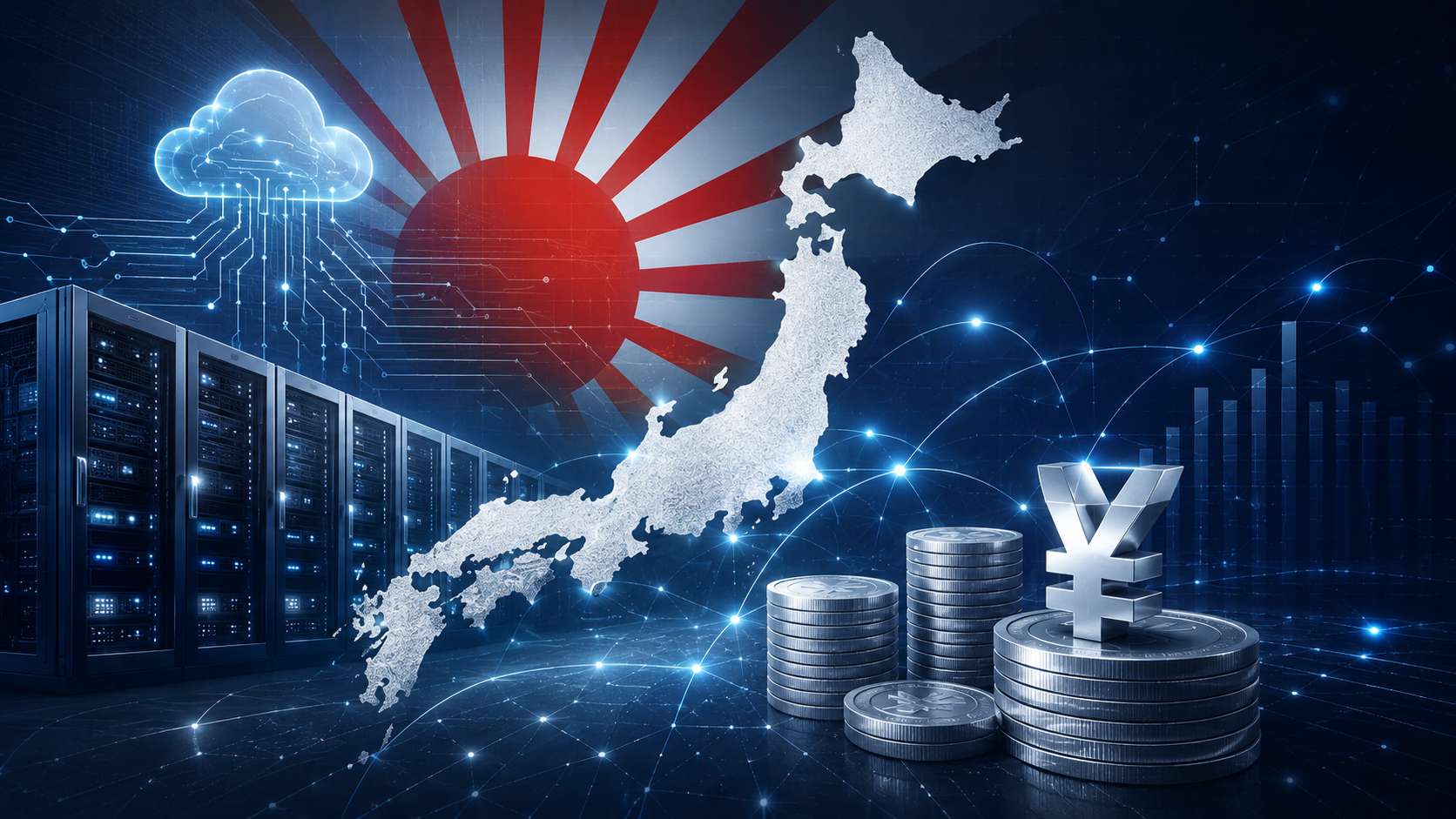
Microsoft has unveiled one of its largest-ever investments in Japan. According to a plan the company disclosed on April 3, 2026, it will pour 1.6 trillion yen (about $10 billion) into cloud and AI infrastructure from 2026 through 2029. Miki Tsusaka, president of Microsoft Japan, and Brad Smith, vice chair and president of Microsoft, took the stage, with Prime Minister Takaichi reported to be in attendance. More than a routine capital-expenditure announcement, it is news worth watching because it reveals a geopolitical choice about which country will host the foundations of AI.

What a 1.6 trillion yen scale signals
First, let us pin down the numbers precisely. The announced investment totals 1.6 trillion yen cumulatively over 2026-2029, roughly $10 billion in U.S. dollar terms (Microsoft, April 3, 2026). The main aim is to expand domestic data center capacity in Japan and meet the growing demand for generative AI.
At the briefing, Smith expressed his strong commitment to the Japanese market.
「Microsoft is deeply invested in Japan, and today's announcement will enable us to meet the country's growing demand for cloud and AI services.」
The gist: the company is deeply invested in Japan, and this announcement lets it answer rising demand for cloud and AI. The sheer size of the investment shows Microsoft positioning Japan not as a mere consumer market but as a key base for AI infrastructure.
What was announced — three pillars
The plan is structured to bundle not only capital spending but also talent and trust. Organizing Microsoft's announcement, it breaks into three major pillars.
| Pillar | Main content | Aim |
|---|---|---|
| Technology | Data center and cloud/AI infrastructure expansion | Meet domestic AI demand |
| Talent | Train 1 million engineers by 2030 | Broaden the base of AI use |
| Trust | Attention to data sovereignty and security | Protect data within the country |
What stands out, alongside the infrastructure build-out, is the goal of training around one million engineers by 2030. Simply placing infrastructure does not mean it gets used. Only when the talent to operate it grows domestically does the investment get recouped as demand. The third pillar, "trust," answers the increasingly sensitive question of where data is stored and who manages it.
Why concentrate investment in Japan now
Behind this lies the question of which country's jurisdiction AI infrastructure sits under. The more generative AI works its way into the core of corporate activity, the stronger the wariness about entrusting confidential data to servers abroad. Nations are beginning to demand the ability to process and store data within their own borders, and securing so-called data sovereignty has become a policy theme.
Tsusaka is reported to have described Microsoft Japan's stance at this juncture.
「we are focused on moving growth from vision to execution」
The phrasing: moving the axis of growth from vision to execution. It suggests a recognition that the company has advanced from a stage of talking about AI's potential to a stage of translating it into actual domestic infrastructure and talent. For Japan too, attracting a major foreign player's infrastructure onto its soil carries meaning for both data sovereignty and industrial competitiveness.
Domestic partners and the market reaction
The effort is reported to involve cooperation with domestic firms rather than Microsoft acting alone. Reports name companies such as SoftBank, Sakura Internet, NTT Data, NEC, Fujitsu, and Hitachi. Across the layers of cloud infrastructure, data center operations, and systems integration, domestic players are involved.
The market reaction was concrete. Following the announcement, Sakura Internet's stock was reported to have risen as much as 20% (April 2026). For domestic data center operators, a major foreign player's large investment was taken as a tailwind for demand. Such a chain shows the investment spilling beyond one company's facilities into related industries.
That said, the short-term stock reaction also carries an element of running ahead on expectations. Exactly which firms win orders, and at what scale, is something that will take concrete shape from here.
How to read this announcement
From a management and investment lens, the announcement holds two implications. One is the fact that the competition over the location of AI infrastructure is intensifying at the national level. When a cloud giant concentrates investment in a particular country, it influences where that country sits in the AI-era supply chain. As bases multiply in Japan, domestic firms gain an environment to use AI with lower latency and higher security.
The other is that talent development was made explicit as a precondition of the investment. The figure of one million is the flip side of a very practical recognition: the investment cannot be recouped without people to make full use of the infrastructure. For companies weighing their own AI adoption, such training programs and the build-out of domestic infrastructure become material that widens their options on talent and cost. Because these are figures on a reporting basis, it remains essential to verify execution through follow-up coverage.
Key takeaways
On April 3, 2026, Microsoft announced it will invest 1.6 trillion yen (about $10 billion) in Japan from 2026 to 2029 to expand cloud and AI infrastructure. The plan is built on three pillars — technology, talent (training one million engineers by 2030), and trust (data sovereignty) — and involves cooperation with domestic firms such as SoftBank and Sakura Internet. The market responded, with Sakura Internet's stock rising as much as 20% just after the announcement. The key points are that the siting of AI infrastructure is becoming a national-level competition, and that talent development was made explicit as a precondition for recouping the investment.
PR

Sources
This article was independently written and edited by the Business Age Editorial Team based on the multiple verified sources below. See each source for full details.
- Microsoft Source Asia (official announcement)Read the original →
- CNBCRead the original →
PR
Related
Related articles

SoftBank Group's Record ¥5 Trillion Profit—and Why Most of It Is an Unrealized Gain

AI Spending Has Changed Orders of Magnitude: $725B Across Four Firms, $500B for Stargate
87% of Japanese Firms Use Generative AI—Yet They Rank Last at Turning It Into Profit

Data Center Revenue Up 92%: What NVIDIA's Earnings Reveal About AI Infrastructure

OpenAI's $38.5B Loss and Triple-Digit Growth: Reading the Bet Behind "Invest-First" AI

The Real Map of AI Side-Income: The Skills That Doubled, and Why Humans Still Win
Categories
Browse other categories





Get the latest business methods, first.
We share new articles and notable tools and trends on social.